For decades, a small box that connects to your TV and plays video games has been universally known as a “video game console.” From the Atari to the PlayStation 5, the definition seemed straightforward. So, when Valve, the company behind Steam and beloved titles like Dota 2 and Half-Life, introduced the Steam Machine, many naturally labeled it as their foray into the console market. However, Valve is adamantly pushing back against this classification, insisting that the Steam Machine is something fundamentally different: an extension of PC gaming.
This isn’t just a semantic squabble; it’s a philosophical declaration that sheds light on Valve’s vision for the future of gaming hardware and the PC ecosystem. For global readers navigating the ever-evolving landscape of gaming technology, understanding Valve’s perspective is crucial to grasp where the Steam Machine fits in and what it means for the industry.
The “Console” Conundrum: Why the Confusion?
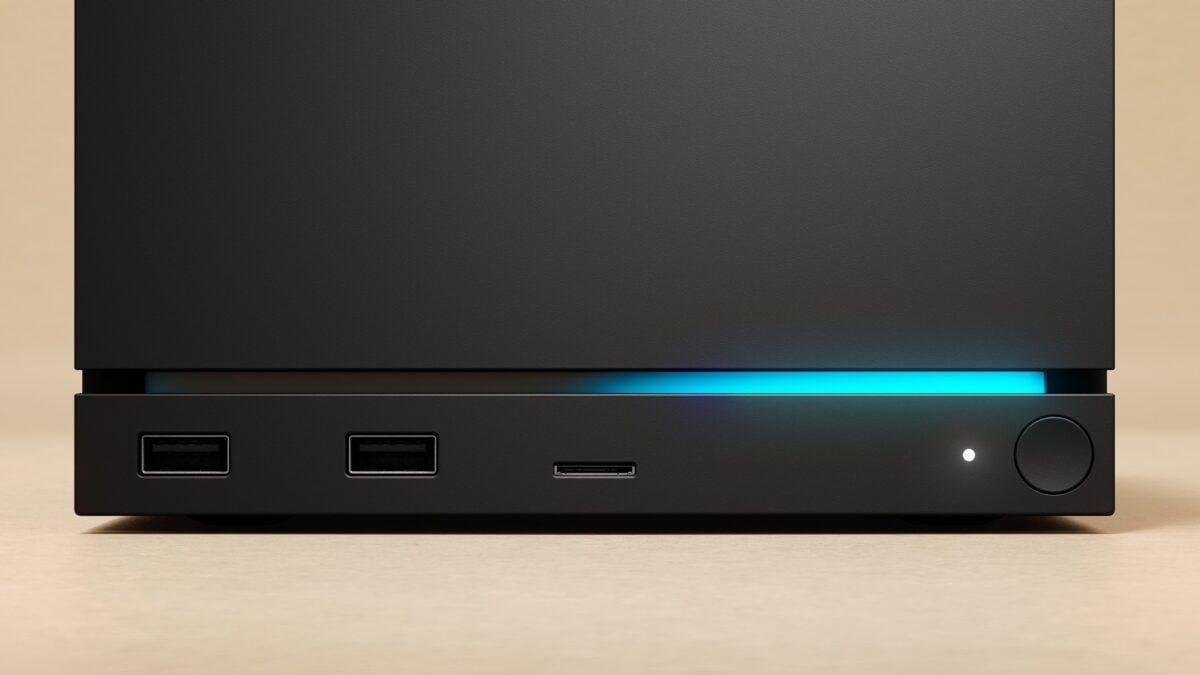
It’s easy to see why gamers and media alike initially called the Steam Machine a console. Its form factor—a compact device designed to sit in your living room, hooked up to a television—mirrors that of traditional consoles. It’s built to run games, often from the comfort of a couch, using a controller. This physical resemblance and intended use case are powerful indicators that have shaped our understanding of gaming devices for generations.
Yet, Valve sees this as a superficial interpretation. In their own words, from an FAQ about the device, they rhetorically ask, “Is this the Valve console?” Their immediate answer: “We think of Steam Machine as an extension of PC gaming, not as a console.” This statement immediately challenges the conventional wisdom, forcing us to look beyond the exterior and consider the underlying architecture and business model.
For Valve, the distinction lies not in where a device sits or what it connects to, but in its fundamental nature and the ecosystem it belongs to. A PC is a PC, whether it’s a towering desktop or a sleek, living-room-friendly box. The key, they argue, is the openness and flexibility that define the PC gaming experience.
Valve’s Philosophy: Openness vs. Locked Ecosystems
At the heart of Valve’s argument is a profound philosophical difference regarding the very definition of a video game console. They articulate this by contrasting the “traditional console model” with the “open ecosystem” of PC gaming. According to Valve, the traditional model often involves selling hardware at a loss, with manufacturers recouping revenue through subscription services or by selling games that are “locked-in” to their specific hardware platform. This approach, while potentially beneficial for a single business in the short term, is seen by Valve as restrictive for customers in the long run.
Instead, Valve champions the “open ecosystems” paradigm, citing PC gaming’s history as proof of its superiority. They argue that the openness of the PC platform has been the primary driver of hardware and software innovation for decades. This includes:
- Hardware Flexibility: PC gamers can choose from a vast array of components, customizing their rigs to suit their performance needs and budget.
- Software Freedom: Games aren’t tied to a single storefront; players can purchase titles from Steam, Epic Games Store, GOG, or others.
- Upgradeability: Unlike consoles with fixed hardware for their lifespan, PCs can be upgraded component by component, extending their relevance.
- Modding and Customization: The open nature of PC gaming fosters vibrant modding communities, allowing players to tailor their gaming experiences.
- Backward Compatibility: Older PC games generally remain playable on newer hardware, a stark contrast to console generations where compatibility can be a challenge.
This philosophy suggests that the Steam Machine is designed to embody these PC virtues, offering users a more flexible, future-proof, and choice-driven gaming experience than a traditional, closed console system.
The Price Tag: A PC Perspective on Value
Valve’s philosophical stance also offers a very convenient explanation for one of the Steam Machine’s most talked-about aspects: its price. When it was discussed, models like the tiny 512GB version were reportedly priced around $1,050, with a 1TB version reaching approximately $1,350. These figures stood in stark contrast to traditional consoles of the era, such as the PlayStation 5 or Xbox Series X, which were available for around $600 for all-digital versions, or even the PS5 Pro, discussed at roughly $900 for a 2TB SSD.
This significant price difference is directly tied to Valve’s argument. Traditional console manufacturers often take a loss on hardware sales, banking on making that money back through platform fees on game sales (typically around 30% on third-party titles) and subscription services. This model allows them to offer powerful hardware at an attractive upfront cost to draw in consumers.
Valve, however, asserts that the Steam Machine is not operating on this subsidized model. By positioning it as an “extension of PC gaming,” they are effectively saying that its pricing reflects the true cost of PC components, without the hardware subsidy common in the console world. This means consumers are paying for the hardware itself, much like they would for a custom-built gaming PC, rather than for a loss-leader device intended to lock them into an ecosystem for future profit. It’s a PC price for a PC device, even if it comes in a console-like package.
It’s worth noting the interesting parallel here: while Valve criticizes the traditional console model for relying on software fees, Valve itself collects a 30% platform fee on games sold through Steam. This is, after all, a cornerstone of their highly successful business model. The difference, in Valve’s view, is that their platform fee isn’t being used to subsidize hardware losses, but rather to maintain and develop the Steam ecosystem, which benefits a vast array of PC hardware, not just their own.
What Does This Mean for Gamers?
For gamers, Valve’s insistence that the Steam Machine is an “extension of PC gaming” carries several implications. Firstly, it positions the Steam Machine as another option within the broad PC landscape, rather than a direct competitor to PlayStation or Xbox. This means users should expect the flexibility and openness associated with PC gaming, including access to a vast library of Steam games, the ability to potentially customize or upgrade components (depending on the specific Steam Machine model), and the freedom to connect various peripherals.
Secondly, it underscores the importance of understanding the value proposition. While the upfront cost might be higher than a console, the long-term value could come from the freedom from platform-specific subscriptions for online play (beyond what individual games might require) and the potential for a longer, more upgradeable lifespan compared to a fixed-generation console. It’s about investing in an ecosystem, not just a single piece of hardware.
Ultimately, Valve’s stance challenges us to rethink our preconceived notions of what constitutes a “console” versus a “PC.” It highlights the ongoing convergence of gaming hardware and the blurring lines between traditional categories. For those seeking the power and flexibility of PC gaming in a living room-friendly format, the Steam Machine, as an “extension of PC gaming,” aims to offer a compelling, albeit premium, solution.
Whether you agree with Valve’s classification or not, their argument forces a valuable conversation about business models, open ecosystems, and the future direction of gaming hardware. It encourages gamers to look beyond the box and consider the philosophy within.
What are your thoughts on Valve’s definition? Share your perspective on whether the Steam Machine truly transcends the console label in the comments below!
Source/context: Valve Swears The Steam Machine Is Not A Video Game Console. This is a draft summary and should be reviewed before publishing.